'/%3E%3C/svg%3E) EN
 DE
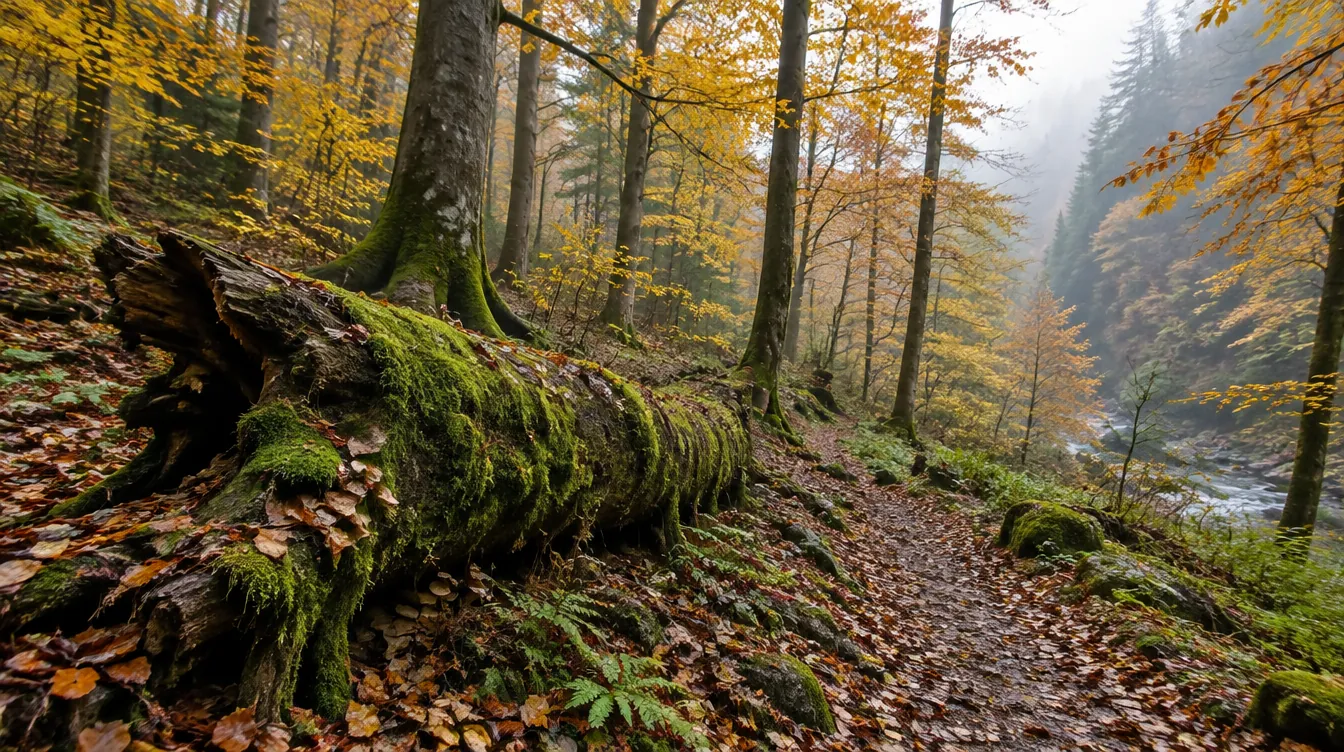
Wildnispark Sihlwald is a forest that has been allowed to go wild. For centuries the Sihlwald, in the Sihl valley south of Zürich, was the city’s timber forest; in 2000 the foresters put down their saws, and since then fallen trees stay where they fall and the beech woods grow back towards a natural forest. Today it is Switzerland’s first federally recognised Nature Discovery Park, 26 minutes from Zürich HB on the S4 (from 13 December 2026), free to visit, with otters, a wilderness playground and fire places with free wood. We checked the opening times, rules and train times below on the park’s official site in November 2026.
📍 Visitor centre: Alte Sihltalstrasse 38, 8135 Sihlwald · 🕐 forest, playground and fire places open all year; visitor centre closed until 27 March 2027 · 🎟️ free (exhibition CHF 10 when open) · official website
Why visit Wildnispark Sihlwald
Most Swiss forests are tidy: trees are planted, thinned and cut. In the Sihlwald nobody tidies up any more, and you see the difference at once. Moss-covered trunks lie across the slopes, dead trees stand full of woodpecker holes, and young beeches crowd into every gap where an old one fell. It is not a primeval forest, but it is the largest natural forest reserve on the Swiss Plateau, and it is getting wilder every year.
For a day out it has everything: easy walks along the river, longer climbs to the Albis ridge, otters you can watch for free, a superb natural playground and fire places with firewood ready. It is the quieter half of the Wildnispark Zürich; the other half, Wildnispark Langenberg with its bears and wolves, is one stop down the line.
The story of the wild forest
The Sihlwald has belonged to Zürich since the Middle Ages and supplied the city with wood for centuries; logs were floated down the Sihl until 1864, and a forest railway ran here from 1876. In the 1980s the city forester Andreas Speich proposed letting it return to nature. Forestry stopped in 2000, the canton protected the area in 2008 after a city vote in which almost 90 percent said yes, and on 1 January 2010 the Sihlwald became the first Nature Discovery Park of national importance in Switzerland.
The park covers about 11 square kilometres, most of it a strict natural forest reserve. Twenty-five years on, the forest already holds more than three times as much deadwood as a managed forest, and that deadwood is home to beetles, fungi and insects that had become rare. On cold, still winter mornings you may even find “hair ice”, fine white threads of ice that grow out of rotting branches. More on the natural forest reserve page.
What is open in winter
From 26 October 2026 to 27 March 2027 the visitor centre and exhibition are closed, but most of what families come for stays open, all day and free:
- The forest and all trails.
- The wilderness playground next to the visitor centre: nests of branches, rope bridges, a wooden snake, a hollow tree trunk to crawl through and water to splash in.
- Three fire places with seating in front of the visitor centre, with firewood provided free, plus covered seating areas.
- The otter enclosures outside on the bank of the Sihl.
- The Forest Nature Trail, 12 stations with tree rings, sounds, a barefoot path and a boardwalk through a bog forest; in winter it is a 2.8-kilometre loop of about two hours.
There is no restaurant at the visitor centre (the campsite bistro is open in summer only), so bring a picnic and sausages for the fire. The nearest restaurant open in winter is at Langenberg.

Otters and beavers
Otters died out in Switzerland in 1989, and the two otter enclosures by the visitor centre are one of the few places where you can see them. They are most active at dusk, so late afternoon is the best time to watch. In autumn 2026 a young otter was born here, and with luck you can spot it in the lower enclosure. Wild beavers have moved in on their own too: since early 2024 they have lived on the Sihl right next to the otters, and you can see their gnawed trees along the bank.
The visitor centre and exhibition
When it reopens on 28 March 2027 (Friday to Sunday), the visitor centre has a two-floor exhibition, “From commercial to natural forest”, with films, research stations, caves to crawl into and animals to touch, plus an aquarium with native fish and crayfish and a shop with more than 1,000 books. Admission is CHF 10 for adults, CHF 5 for children aged 7 to 16 and CHF 20 for families; it is free with the Zürich Card, the Swiss Travel Pass and the Swiss Museum Pass (visitor centre). Note that the footbridge at the visitor centre is currently closed for safety, with a signed diversion.
Walks in the Sihlwald
The park has 73 kilometres of footpaths. Some good options:
- Along the Sihl: the flat riverside path is easy in any season and links Sihlwald with Langnau-Gattikon and Langenberg (see the park’s Riverside Path and Forest Route).
- Albispass – Albishorn – Sihlwald: 8.1 kilometres, about 2 hours 15, along the Albis ridge with views of Lake Zürich and the Alps, then down through the reserve to the station.
- Sihlwald circular walk: from the station up past the Albishorn pond to the ridge and the Albishorn (about 1.5 hours up), and back along the Sihl via Sihlbrugg.
- Winter route Albispass – Albishorn – Tüfenbach: 7.3 kilometres, about 3 hours 20, the park’s official winter hike.
All routes are on the park’s routes page. Steep paths can be icy in winter, so wear boots with grip.
Rules: core zone and dogs
The park has two zones. In the core zone (about 40 percent) you must stay on the paths, fires are not allowed, and nothing may be picked or taken away. In the nature discovery zone you may leave the paths, pick mushrooms and berries, and make fires at the marked places. Dogs must be on a lead throughout the park, except between the riverside path and the Sihl from 1 August to 31 March. Camping, drones and littering are forbidden. Because the forest is left alone, dead branches can fall: don’t stop under dry trees and stay out of the forest in storms (rules).
How to get to Wildnispark Sihlwald
Take the S4 to Sihlwald, the end of the line; the visitor centre is five minutes on foot from the station. The S4 runs to Sihlwald once an hour. Until 12 December 2026 it starts at Zürich Selnau (24 minutes to Sihlwald), because the SZU platforms at Zürich HB are being rebuilt; Selnau is a 12-minute walk or a short tram ride from the main station. From 13 December 2026 the S4 runs from Zürich HB again, about 26 minutes to Sihlwald. By car, parking costs CHF 10 a day. See our guide to getting around Zürich for tickets and zones.
Tips for the Sihlwald
- Combine it with Langenberg: walk the riverside path or ride the S4 three minutes to Langnau-Gattikon, then 20 minutes up to the bears and wolves.
- Bring sausages and bread: the free wood at the fire places makes a winter barbecue easy.
- Check the train times home: with one train an hour from Sihlwald, it pays to plan.
- Go after rain for the best fungi and mosses, and on frosty mornings for hair ice.
- On 5 December 2026 a historic steam train runs from Zürich Wiedikon to Sihlwald with Samichlaus waiting at the visitor centre (tickets from the Zürcher Museums-Bahn).
Wildnispark Sihlwald: FAQ
Is Wildnispark Sihlwald free?
Yes. The forest, playground, fire places and otter enclosures are free. Only the exhibition in the visitor centre costs CHF 10 for adults when it is open.
Is the Sihlwald visitor centre open in winter?
No. It is closed from 26 October 2026 to 27 March 2027 and reopens on 28 March 2027, Friday to Sunday. The outdoor areas stay open.
How do you get to the Sihlwald from Zürich?
S4 to Sihlwald, then five minutes on foot. Until 12 December 2026 the S4 leaves from Zürich Selnau; from 13 December from Zürich HB.
Can you see otters in the Sihlwald?
Yes, in two enclosures by the visitor centre, best at dusk. They are outside, so you can see them in winter too.
More outdoor ideas near Zürich
Wildnispark Sihlwald is the place to see a forest go wild. For more, read our guides to Wildnispark Langenberg, Felsenegg on the Albis ridge, the parks in Zürich, the Greifensee and the best day trips from Zürich.
📬 The ZurichGuru newsletter
Once a week: the best events, new places and what is changing in Zürich. Free, unsubscribe any time.