'/%3E%3C/svg%3E) EN
 DE
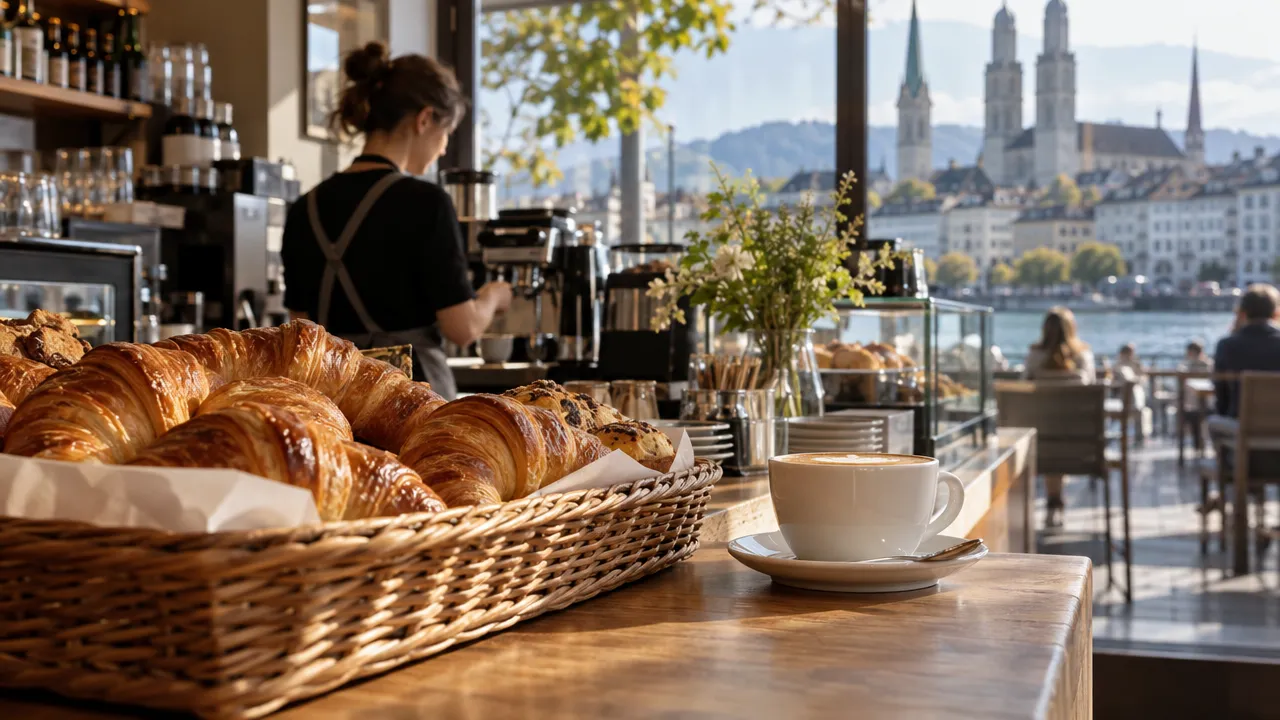
Swiss German phrases are the first thing you notice in Zürich: the city writes in Standard German but speaks Züritüütsch, the local dialect, almost everywhere. You do not need to speak it to live here, since most people switch happily to Standard German or English. But a “Grüezi” at the bakery and an “En Guete” at lunch open doors, and knowing the everyday words saves you a lot of confusion. Below are 13 groups of words and phrases you will hear from day one, each with a simple pronunciation hint.
🗣️ 13 word groups, from greetings to flat-hunting words · 🎧 pronunciation hints in [brackets], stress in capitals · 📚 where to learn: courses from about CHF 184 a month · official language info (Canton of Zürich, in German)
Swiss German in 60 seconds
Swiss German is not one language but a family of spoken dialects, and Zürich German is one of them. There is no official spelling, so you will see the same word written several ways in text messages and on menus. Everything formal, from your rental contract to the tram announcements, is in Standard German.
The pronunciation hints below are rough English sounds. “Ch” is the throaty sound in Scottish “loch”, written KH. “Ü” is like the French “u”: say “ee” with rounded lips. Most words are stressed on the first syllable.
1. Grüezi — the hello you will say every day
🎧 Grüezi [GRÜ-ets-ee] · Grüezi mitenand [GRÜ-ets-ee MIT-eh-nand], to a group · 👥 to anyone you don’t know · 📍 Zürich and most of eastern Switzerland · Canton of Zürich: language
Grüezi is the polite hello for people you do not know: in shops, at the doctor’s, in the lift and on hiking trails, where everyone greets everyone. To two or more people, it becomes “Grüezi mitenand”. Add the person’s name if you know it: “Grüezi Frau Meier”.
In Bern you will hear “Grüessech” instead. Do not use “Guten Tag” or “Hallo” with strangers: both sound slightly foreign or too casual. Grüezi is the one Swiss German phrase every newcomer should use from the first morning.
2. Hoi, Sali, Salü, Ciao — hello among friends
🎧 Hoi [hoy] · Sali [SAH-lee] · Salü [sah-LÜ] · Ciao [chow] · Hoi zäme [hoy TSEH-meh], to a group · 👥 friends, colleagues you say “du” to, children · Swiss Idiotikon (national dialect dictionary)
Once you are on first-name terms, Grüezi becomes Hoi, Sali or Salü. “Hoi zäme” greets a whole group, for example when you walk into the office kitchen. Ciao is used for both hello and goodbye.
A good rule: answer in the form you were greeted with. If a shop assistant says Grüezi, say Grüezi back; if a new colleague says Hoi, you can relax too.
3. Merci vielmal, Bitte, Exgüsi — thank you, please and sorry
🎧 Merci vielmal [MER-see FEEL-mahl] · Danke vilmal [DAN-keh FEEL-mahl] · Bitte [BIT-teh] · Gern gscheh [gern gsheh] · Exgüsi [EKS-gü-see] · Dialect maps of German-speaking Switzerland
The Swiss borrow freely from French, and “Merci” is the most common thank you. “Merci vielmal” means thank you very much. “Bitte” is please, and the friendly reply to a thank you is “Gern gscheh” (gladly done) or simply “Bitte”.
“Exgüsi”, from the French “excusez”, is the everyday sorry or excuse me, for example when you need to get past someone on the tram. The dialect maps linked above show how many of these words change from valley to valley.
4. Uf Widerluege, Ade, Tschüss — saying goodbye
🎧 Uf Widerluege [oof VEE-der-loo-eh-geh], polite · Ade [ah-DEH] · Tschüss [chüss] · En schöne Tag no [en SHÖ-neh tahg no], have a nice day · Schöne Abig [SHÖ-neh AH-bikh], have a nice evening · Linguistic Atlas of German-speaking Switzerland
“Uf Widerluege” is the polite goodbye that matches Grüezi. In shops you will almost always hear a wish added: “En schöne Tag no” during the day, “Schöne Abig” later on, or on a Friday “Schöns Wuchenend” (have a nice weekend). Reply with “Merci, glichfalls” [GLIKH-falls], thanks, you too.
Among friends it is Ade, Tschüss or Ciao. A short goodbye to the cashier is normal and polite, even when there is a queue behind you.
5. Zmorge, Znüni, Zmittag, Zvieri, Znacht — the meals of the day
🎧 Zmorge [TSMOR-geh], breakfast · Znüni [TSNÜ-nee], 9 o’clock snack · Zmittag [TSMIT-tahg], lunch · Zvieri [TSFEE-eh-ree], 4 o’clock snack · Znacht [tsnakht], dinner · En Guete [en GOO-eh-teh] · Culinary Heritage of Switzerland
The Swiss name their meals by the time of day. The Znüni is the mid-morning break around nine, often a Gipfeli and a coffee, and in many offices it is a fixed ritual. The Zvieri is the afternoon snack at four, a big thing for children. Lunch is early, often from 11:30 or noon.
Before anyone eats, people say “En Guete”, enjoy your meal. Wait for it before you start, and say it back. Our guide to Swiss food in Zürich explains what ends up on the plate.
6. Gipfeli, Weggli, Schoggi — at the bakery and café
🎧 Gipfeli [GIP-feh-lee], croissant · Weggli [VEG-lee], soft milk roll · Bürli [BÜR-lee], crusty roll · Schoggi [SHOG-ee], chocolate · Rahm [rahm], cream · Glace [glahss], ice cream · Café crème [kah-FEH krem] · Swiss Bakers and Confectioners Association
“Es Gipfeli, bitte” is the most useful sentence in any Zürich bakery. The Swiss Gipfeli is a little denser than a French croissant and comes in butter and plain versions. A Weggli is a soft white roll that children love; a Bürli is the crusty roll you eat with a sausage.
Ordering a “Kafi” gets you a coffee, and a Café crème is a long coffee with a little cream. “Glace” is ice cream, borrowed from French. To find the best of them, see our guides to the best bakeries in Zürich and the best specialty coffee in Zürich.
7. Rüebli, Härdöpfel, Peperoni — at the market and supermarket
🎧 Rüebli [RÜ-eb-lee], carrot · Härdöpfel [HER-döp-fel], potato · Peperoni [peh-peh-ROH-nee], bell pepper · Nüsslisalat [NÜSS-lee-sah-laht], lamb’s lettuce · Poulet [poo-LEH], chicken · Chäs [khehs], cheese · Zibele [TSIB-eh-leh], onion · Zürich Tourism: eat and drink
Food words cause the most mix-ups. “Peperoni” in Switzerland is a bell pepper, not a spicy sausage; the hot ones are “Peperoncini”. Rüebli are carrots (the famous Aargau carrot cake is “Rüeblitorte”), and Härdöpfel are potatoes, as in Härdöpfelstock, mashed potato.
Chicken is “Poulet”, from French, on every menu and supermarket label. At the cheese counter, “Chäs” is cheese. Practise these at one of the Zürich markets, where stallholders are usually happy to help.

8. Stange, Proscht, Apéro — at the bar
🎧 e Stange [eh SHTANG-eh], a small draught beer (usually 3 dl) · Proscht [prosht], cheers · Apéro [ah-peh-ROH], after-work drinks · Zahle, bitte [TSAH-leh BIT-teh], the bill, please · Zürich Tourism: nightlife
“E Stange, bitte” gets you a small glass of draught beer, usually 3 decilitres; “es Grosses” is a larger one. When you toast, say “Proscht” or “Zum Wohl” and look each person in the eye as you clink glasses. Skipping the eye contact is the classic newcomer mistake.
The Apéro is a Swiss institution: drinks and snacks after work, at birthdays, at the end of a project. If you are invited to an “Apéro riche”, there will be enough food to skip dinner. For places to try your new words, see our cosy bars in Zürich.
9. Velo, Billett, Tram, Trottoir — getting around
🎧 Velo [VEH-loh], bicycle · Billett [BIL-yet], ticket · Tram [trahm] · Perron [peh-RONG], platform · Trottoir [TROT-wahr], pavement · parkieren [par-KEE-ren], to park · ZVV, Zürich public transport
Transport words come mostly from French. You ride a Velo, not a Fahrrad, and you buy a Billett for the Tram. Trains leave from a Perron, and you walk on the Trottoir. Drivers “parkieren” instead of “parken”.
On a ticket check, the inspector will ask “Billett, bitte”. Our guide to getting around Zürich explains zones and passes, and the Zürich Card guide shows when a visitor pass pays off.
10. Natel, zügle, Hauswart, Ghüder — words for home and flat
🎧 Natel [nah-TEL], mobile phone (also Handy) · zügle [TSÜG-leh], to move house · Hauswart [HOUS-vart], caretaker · Wöschchuchi [VÖSH-khoo-khee], laundry room · Estrich [ESH-trikh], attic · Ghüder [GHÜ-der], rubbish · Chuchichäschtli [KHOO-khee-khesht-lee], kitchen cupboard · City of Zürich: moving house
These words will come up the moment you look for a flat. “Zügle” means to move house, and a “Zügelfirma” is a removal company. The Hauswart or Abwart looks after the building, and the Wöschchuchi is the shared laundry room with its booking plan, a classic topic of Swiss house rules.
“Natel” was the old Swisscom name for a mobile phone, still used by many; younger people say “Handy”. “Ghüder” is rubbish, which takes us straight to the Züri-Sack, explained in our guide to recycling in Zürich. And if you can say Chuchichäschtli, locals will be impressed. More flat vocabulary is in finding a flat in Zürich.
11. Gäll, oder, luege, poschte — little words you hear all day
🎧 gäll? [gell], isn’t it? · oder? [OH-der], right? · luege [LOO-eh-geh], to look · lose [LOH-seh], to listen · schaffe [SHAF-feh], to work · poschte [POSH-teh], to go shopping · gliich [gleekh], same · Grüessli [GRÜESS-lee], regards · City of Zürich: learning German
Many sentences in Zürich end with “oder?” or “gäll?”, which do not mean “or” but ask for agreement, like “right?”. “Lueg emal!” is “look!”, “Los emal!” is “listen!”, and “Ich gang go poschte” means “I’m going shopping”.
“Schaffe” is to work, and “chrampfe” is to work hard. “Es isch mer gliich” means “I don’t mind”. Messages and e-mails between colleagues often end with “Liebi Grüess” or simply “Grüessli”.
12. Züri, Badi, Chreis Cheib, Sächsilüüte — Zürich’s own words
🎧 Züri [TSÜ-ree], Zürich · Züritüütsch [TSÜ-ree-tüütsh], Zürich German · Badi [BAH-dee], outdoor pool or lake bath · Chreis [khrice], city district · Chreis Cheib [khrice khibe], nickname for District 4 · Sächsilüüte [SEKH-see-lüü-teh], Sechseläuten · HB [hah-BEH], main station · Sechseläuten official site
Locals call their city Züri and its dialect Züritüütsch. The city is divided into twelve Kreise (districts), so “Ich wohne im Föifi” means “I live in District 5”. District 4, the old working-class quarter around Langstrasse, has the nickname “Chreis Cheib”. “Hauptbahnhof” is almost always just “HB”.
In summer everyone heads to the Badi, the lake and river baths; see our best places to swim in Zürich. In spring the guilds celebrate “Sächsilüüte”, when the Böögg snowman is burned; our guide to Sechseläuten in Zürich has the details. And Zürich’s signature dish is “Züri Gschnätzlets”, veal in a creamy sauce with Rösti.
13. Spital, Ferien, innert — Swiss Standard German in writing
📄 Spital, hospital · Ferien, holiday · innert, within · Pendenz, open task · Traktanden, agenda items · allfällig, any/possible · no “ß”: always “ss” · Federal Chancellery writing guidelines (in German)
Even written Standard German has a Swiss flavour, and newcomers who learned German elsewhere notice it in letters from the landlord, the tax office or the insurer. A hospital is a “Spital”, holidays are “Ferien”, and “innert 30 Tagen” means within 30 days. At work, open tasks are “Pendenzen” and the meeting agenda lists “Traktanden”.
Switzerland does not use the letter ß: it is always “ss”, as in “Strasse”. That is a federal rule for official texts, and you will see it on every street sign. When your health insurance in Zürich letters arrive, these words will already look familiar.
Polite forms: Sie or du?
Use “Sie” (in Zürich German “Si”) with strangers, in shops, with officials and with older neighbours: “Chönd Si mir hälfe?” means “Can you help me?”. Many workplaces, especially international ones, switch to “du” and first names on day one; wait until a colleague offers it, or follow what everyone else does.
When you phone someone, say your name first: “Grüezi, Smith am Apparat” or simply “Grüezi, da isch Anna Smith”. Answering a call with just “Hello?” sounds abrupt to Swiss ears.
How Swiss German differs from Standard German
- It is mainly spoken. News, school lessons and official texts are in Standard German, while daily life, much of local radio and TV and family chats are in dialect.
- Different sounds. “Ch” is throaty, long vowels become double ones (Züri “Huus” for “Haus”) and “ie” and “ue” are spoken as two sounds.
- Simpler past tense. Swiss German has no simple past: “Ich bin gsi” (I have been) instead of “ich war”.
- The little “-li”. Almost anything can be made small and friendly: Gipfeli, Grüessli, Chuchichäschtli.
- French words. Merci, Velo, Trottoir, Glace, Poulet and Billett all came across the language border.
- Every region is different. A Bernese, a Basler and someone from Valais speak noticeably differently, and all are proud of it.
If you speak Standard German, you will be understood everywhere. Swiss people usually switch to Standard German for you, and they appreciate it when you try a Grüezi, a Merci or an En Guete in return.
Where to learn Swiss German in Zürich
- Klubschule Migros: the big adult-education school runs Swiss German courses at several Zürich locations, including Limmatplatz. Klubschule language courses
- VOX-Sprachschule: a private school a few minutes from Zürich HB, with groups of two to five. Swiss German courses from CHF 184 a month (CHF 2,205 for 24 lessons of 90 minutes) and a free trial lesson. VOX Swiss German courses
- Language Center of UZH and ETH Zürich: German and Swiss German courses for students and staff of the University of Zürich, ETH and partner schools. Language Center courses
- City and canton course search: most newcomers should start with Standard German; the City of Zürich lists subsidised courses, and the canton’s course search covers the whole region. City of Zürich: learning German · German course search Zürich
- Free online: the Swiss Idiotikon is the national dictionary of Swiss German, good for looking up unfamiliar words.
Our tip: learn to understand Swiss German before you try to speak it. Listening to local radio and joining the Znüni at work will teach you more than any phrase list.
Swiss German phrases: FAQ
Do I need to speak Swiss German to live in Zürich?
No. For permits, Standard German is what counts, and English is widely spoken at work. Understanding Swiss German, though, makes social life and small talk much easier.
Is it rude to answer in Standard German or English?
Not at all. Most Swiss switch languages without a second thought. What people do notice is a friendly Grüezi and Merci, so start with those.
Which Swiss German phrases should a visitor learn first?
Grüezi, Merci vielmal, Uf Widerluege, Exgüsi and En Guete. With these five you can be polite in any shop, café or tram in Zürich.
Try the phrases out at a practice from our list of family doctors or at one of the hairdressers in Zürich, where a friendly Grüezi goes a long way.
Planning to stay for good? Spoken German at B1 level is one of the requirements for Swiss citizenship in Zürich.
If you want to learn it properly, see our list of German courses in Zürich with prices and Swiss German classes.
Keep planning
- Moving to Zürichpermits, flats, insurance and costs for newcomers
- Health insurance in Zürichthe three-month rule, franchise and 2027 premiums
- Recycling in Zürichwhere your Ghüder goes
- Zürich Cardfree trams and museum discounts for visitors
- Getting around Zürichtrams, Billett and zones
- Swiss food in Zürich15 dishes and where to eat them
- Find a Pro in Zürichmovers for your next “zügle”
📬 The ZurichGuru newsletter
Once a week: the best events, new places and what is changing in Zürich. Free, unsubscribe any time.