'/%3E%3C/svg%3E) EN
 DE
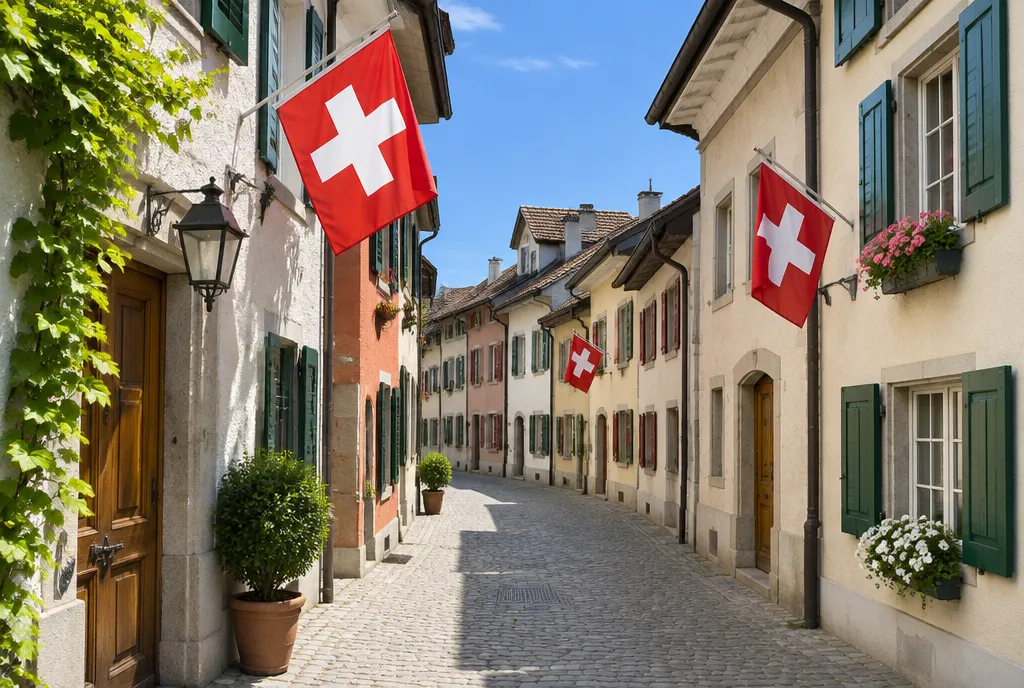
Getting Swiss citizenship in Zürich takes three approvals: the City of Zürich, the Canton of Zürich and the federal State Secretariat for Migration (SEM). For ordinary naturalisation you need a C permit, ten years in Switzerland and at least two years living in the city, plus German at B1 spoken and A2 written level and a pass in the cantonal knowledge test. You apply online with the canton, and the whole procedure takes about two years. Below are the requirements, the real CHF fees and every step, checked on the city, canton and SEM websites in November 2026. If you have only just arrived, start with our guide to moving to Zürich.
📍 Stadtkanzlei, Einbürgerungen, Stadthaus, Stadthausquai 17 · 🎟️ about CHF 1,100 for one adult over 25 (city CHF 500 + canton CHF 500 + federal CHF 100), free at city level under 25 · ⏱️ about 2 years · ordinary naturalisation (City of Zürich)
| Federal requirement | C permit + 10 years in Switzerland, 3 of them in the last 5 years; years between age 8 and 18 count double |
|---|---|
| Zürich requirement | 2 years living in the City of Zürich before you apply (under 25: 2 years anywhere in the canton) |
| Language | German B1 spoken, A2 written (certificate or cantonal test KDE, CHF 250) |
| Knowledge test | Grundkenntnistest at the Stadthaus, free in the City of Zürich |
| Fees (adult over 25) | City CHF 500 + canton CHF 500 + federal CHF 100 (CHF 150 for a married couple) |
| Under 25 | No city fee, canton CHF 250; under 20 also no canton fee |
| Where to apply | Online with the Gemeindeamt of the Canton of Zürich (Zürikonto) |
| Processing time | About 2 years for ordinary naturalisation |
What Swiss citizenship in Zürich costs
Each level charges its own fee. The canton and federal amounts are the same everywhere in the canton; the city fee is set by the City of Zürich’s own fee ordinance, in force since 1 September 2024. Children included in a parent’s application pay nothing at any level.
| Applicant | City of Zürich | Canton | Federal (SEM) |
|---|---|---|---|
| Over 25 | CHF 500 per person | CHF 500 | CHF 100 (married couple CHF 150) |
| Under 25 when applying | free | CHF 250 | CHF 100 (under 18: CHF 50) |
| Under 20 when applying | free | free | CHF 100 (under 18: CHF 50) |
| Children included in the application | free | free | free |
| Application rejected | city fee still due if the city already decided | CHF 200 | CHF 300 |
On top come the civil register extract and, if you have no certificate, the cantonal German test (CHF 250 in the city, or CHF 150 for one part). For applicants under 25, the city pays the German test too. The city can reduce or waive its fee for people on a modest income who qualify for a health insurance premium subsidy (see our health insurance in Zürich guide).
1. Check the federal basics — 10 years and a C permit
🪪 valid C permit · 📅 10 years in Switzerland, 3 of them in the 5 years before you apply · 👧 age 8 to 18 counts double (at least 6 years actually lived here) · federal citizenship FAQ (SEM)
You can only apply with a valid settlement permit C. Not every year counts the same: years with a B or C permit count in full, years with an F permit (provisionally admitted) count half, and years as an asylum seeker (N) or on a short-term L permit do not count at all. Years spent here between your 8th and 18th birthdays count double, but you must have actually lived in Switzerland for at least six years.
If you do not have the C permit yet, our residence permit guide explains when you can switch from B to C. Children under 18 can be included in their parents’ application and do not need the ten years themselves.
2. Check the Zürich residence rule — 2 years in the city
🏙️ 2 years living in the City of Zürich before applying · 🎓 under 25: 2 years in the canton is enough · 🚚 moving out of the city too early can end the procedure · ordinary naturalisation (Kanton Zürich)
Under the cantonal citizenship law in force since 1 July 2023, you must have lived in the same municipality for at least two years before you apply. In practice that means two years with your address registered in the City of Zürich; your registration at the Kreisbüro is the proof. If you are under 25, two years anywhere in the canton is enough.
Moving inside the city is fine at any time. Moving to another municipality is only possible once the city has finished its checks; before that, the canton says the procedure ends and you start again after two years in the new place. Under-25 applicants may move within the canton throughout. If a new flat is on the horizon, read our finding a flat in Zürich guide and time the move with care.
3. Check integration, money and record — the conditions people forget
🚫 no social assistance in the last 3 years · 🧾 no unpaid debt collection entries in the last 5 years · ⚖️ no relevant criminal record · self-check and overview (Kanton Zürich)
You must cover your living costs through work, savings or benefits such as AHV, IV or unemployment pay, or be in education. You must not have received social assistance in the three years before applying, unless you have paid it back in full, needed it through no fault of your own for a first education, were a minor in a family on assistance, or receive it although you work full time (working poor). Unpaid entries in the debt collection register (Betreibungsregister) in the last five years and open criminal proceedings are a stop.
The authorities also look at whether you take part in local life and have contact with Swiss people, for example through a club, a parents’ group, neighbourhood events or volunteering, and whether you support your family’s integration. You sign a declaration on this with your application. Going to the Sechseläuten or the Knabenschiessen will not replace a club membership, but it helps for the knowledge test too. The canton’s online self-check tells you within minutes whether you meet the conditions.
4. Prove your German — B1 spoken, A2 written
🗣️ B1 listening and speaking, A2 reading and writing · 📜 Goethe, telc, ÖSD, fide or the Swiss digital test SDS · 🎟️ cantonal test KDE CHF 250 in the city (free for under 25) · German requirements (City of Zürich)
You need standard German, not Swiss German. The city accepts certificates from the Goethe-Institut, telc, the Austrian ÖSD, the fide language passport and the Swiss digital language test SDS, as long as they show B1 oral and A2 written. If you have no certificate, you can still apply: the city then sends you to the Kantonaler Deutschtest für die Einbürgerung (KDE), with an oral part (introduce yourself, talk about an everyday topic) and a written part (listening, reading, writing). A free model test with audio and answers is on the canton’s KDE page.
You need no proof at all if German is your mother tongue, if you went to school in German for at least five years, are currently in compulsory school or upper secondary education in German, or finished an apprenticeship, Matura, university or university of applied sciences degree in German. Health reasons and learning difficulties are taken into account. Knowing a few Swiss German phrases helps in the interview, even if the test itself is in standard German.
5. Get your civil register extract — before anything else
📄 extract from the Swiss civil register, max. 6 months old when you apply · 🏛️ Zivilstandsamt der Stadt Zürich · ⏱️ registration can take weeks to months · civil register registration (City of Zürich)
Both the city and the canton say the same thing: without an extract from the Swiss civil register (Personenstandsausweis), the procedure cannot start. Many foreign residents were never fully entered in the register, especially if they married or had children abroad. The city’s civil registry office checks your data through an online form and tells you which foreign documents are missing, such as birth or marriage certificates, sometimes with apostille and translation.
Start this first, because it can take several months, and order the final extract so that it is less than six months old on the day you submit. Fees apply for the registration and the extract; the office tells you the amount with the invoice.
6. Apply online with the canton — documents and Zürikonto
💻 online with the Gemeindeamt via Zürikonto (log in with AGOV) · 📮 paper application by post also possible · 📋 employer or school confirmation, civil register extract, declaration on social life · submit your application (Kanton Zürich)
The application does not go to the city first. You submit it online to the Gemeindeamt of the Canton of Zürich: on its ordinary naturalisation page, click Login and choose AGOV for a new application (later, ZHservices to follow it). The canton’s checklist lists everything; typically you upload the civil register extract, a confirmation from your employer (city form) or from your school or university if you are studying, the signed declaration on taking part in social and cultural life, your language certificate if you have one, and for children over 12 in compulsory school a confirmation from the district school board.
The canton first checks the formal points, such as the residence periods, and then passes your file to the city. Keep your tax payments up to date during the whole procedure (our taxes in Zürich guide explains the system), and keep your AHV number handy, as Swiss forms ask for it.

7. Pass the Grundkenntnistest — Switzerland, canton and city
📍 at the Stadthaus, after you apply · 🎟️ free in the City of Zürich · 📚 learning brochure by post, practice test and full question list online · Grundkenntnistest and practice test (Kanton Zürich)
The cantonal knowledge test asks about the geography, history, politics and society of Switzerland, the Canton of Zürich and how Zürich municipalities work. In the City of Zürich you take it on site at the Stadthaus, free of charge, once you have applied; the city invites you and sends the learning brochure by post. Other municipalities charge for it or ask for it before you apply, so the city is a good place to go through this.
How to prepare: the canton publishes the brochure “Einbürgerung” (76 pages), the complete list of questions and an online practice test you can repeat as often as you like. Municipal information sheets say the catalogue holds about 350 questions, of which 50 come up in the test. Study the federal system (Federal Council, the two chambers, popular votes), cantonal politics and local facts such as the city’s districts. Through the interview you also get access to a learning app.
You are exempt if you went to compulsory school in Switzerland for at least five years, three of them at lower secondary level, finished an apprenticeship or Matura here, or are currently in Swiss compulsory or upper secondary school. Our guide to schools in Zürich explains these levels.
8. The Einbürgerungsgespräch — a talk with the city
🏛️ Stadtkanzlei, Abteilung Einbürgerungen, Stadthaus · 💬 personal interview if questions remain · ☎️ phone advice Mon, Tue, Thu, Fri 8–12 and 13–16:30, Wed 8–12 · naturalisation office (City of Zürich)
The city checks four things: your German, your basic knowledge, your social integration and your participation in working life or education. If anything is still open after reading your file and test results, a staff member of the naturalisation department invites you to a personal interview. Expect questions about your daily life in Zürich, your work, your contacts, your children’s school and what you know about local politics.
It is a conversation with one staff member, not an exam in front of a committee. Answer honestly, bring the documents you are asked for, and say so if your situation has changed since you applied (new job, move, birth).
9. City and canton citizenship — two separate decisions
✅ city grants Gemeindebürgerrecht, confirmation by post · 🔁 file back to the canton for a second check · ✅ canton grants Kantonsbürgerrecht · procedure step by step (City of Zürich)
If you meet all the conditions, the city grants you the citizenship of the City of Zürich and sends you a confirmation by post. The city fee is due from this point, even if the canton or the federal government later says no or you withdraw. Your file then goes back to the Gemeindeamt, which checks it again and grants the cantonal citizenship of Zürich.
Swiss citizenship always has three layers: municipality, canton and country. Once naturalised, your place of origin (Heimatort) will be Zürich, and it appears in your Swiss passport.
10. Federal approval and final decision — SEM, then the canton
🇨🇭 SEM checks internal and external security and issues the federal naturalisation permit · 🎟️ federal fee CHF 100 (couple CHF 150, minor alone CHF 50) · 🏁 Gemeindeamt makes the final decision · federal fees and rules (SEM)
The canton forwards your file to the State Secretariat for Migration, which checks whether you are a risk to Switzerland’s security and then issues the federal naturalisation permit (Einbürgerungsbewilligung). The Gemeindeamt does a final check and grants Swiss citizenship. The canton tells you each time a step is finished; from application to decision, plan on about two years.
The procedure described by the canton has no oath step. Instead, every spring the City Council invites everyone naturalised in the city the year before to a celebration: on 31 March 2026 about 1,200 of the 3,756 people naturalised in 2025 came to the Kongresshaus. After that, order your passport or ID card, and you can vote in the next federal, cantonal and city votes.
11. Married to a Swiss citizen — facilitated naturalisation
💍 3 years of marriage and living together + 5 years in Switzerland, including the last year · 🎟️ SEM fee CHF 900 (under 18: CHF 650), paid in advance · ⏱️ about 2 years · married to a Swiss citizen (SEM)
If your spouse was already Swiss when you married, you can use the faster facilitated procedure (erleichterte Einbürgerung), run by the SEM. You need five years in Switzerland in total, including the year before you apply, and three years of marriage and living together. You do not need a C permit or two years in the city, but you do need B1 spoken and A2 written in a national language, a clean record, paid taxes, no social assistance and basic knowledge of Switzerland, which the city checks in an interview.
The application goes by post to the SEM in Bern-Wabern on the SEM’s own form, which the City of Zürich also sends you free of charge. The SEM fee of CHF 900 is not refunded if you are refused. Registered partners of Swiss citizens cannot use this route, but get shorter residence periods for ordinary naturalisation (five years in Switzerland, three years of partnership). If your spouse became Swiss by ordinary naturalisation after you married, you need the ordinary route.
12. Third generation — facilitated before your 25th birthday
👶 born in Switzerland, C permit, 5 years of school here · 👨👩👧 one parent with 10 years here and 5 years of school, one grandparent born here or with a right of residence · 🎟️ SEM fee CHF 500 (minors CHF 250) · third generation FAQ (SEM)
Grandchildren of immigrants can apply in the facilitated procedure if they were born in Switzerland, hold a C permit, attended compulsory school here for at least five years and are integrated. At least one parent must have a C permit, have lived in Switzerland for ten years and gone to school here for five; at least one grandparent must have been born here or have had a right of residence. The application must reach the SEM by your 25th birthday at the latest; after that, only the ordinary route is open.
Children of a parent who was naturalised can also be included in a facilitated procedure until they turn 22. The second generation has no facilitated route, but young people profit in the ordinary route from the double-counted school years and the lower fees under 25.
Dual citizenship
Switzerland allows dual and multiple citizenship, so it will not ask you to give up your passport. Whether you can keep it depends on your home country: some countries withdraw their citizenship when you take another one, or require permission first. Check with your country’s embassy or consulate before you apply. More on this at ch.ch: naturalisation.
Being Swiss brings duties too. Swiss men are liable for military or civilian service, or pay the military service exemption tax; how this works for dual nationals depends on the country and on treaties, so ask the authorities if it concerns you.
Will the rules change? The 2026/27 vote
The popular initiative “For a modern citizenship law” (Demokratie-Initiative) wants a right to naturalisation after five years of legal residence, with basic knowledge of a national language, no threat to security and no serious criminal record, and it would end cantonal and municipal residence rules. The Federal Council, the National Council and, in September 2026, the Council of States all recommended a no, without a counter-proposal (Swiss Parliament news). The people will vote on it; when we checked in November 2026 no date was set.
Until a change is voted and in force, the rules on this page apply. Do not wait for a possible reform if you already qualify.
Common mistakes
- Moving to another municipality too early. Before the city has finished its checks, a move outside the city ends the procedure (under 25: only outside the canton).
- Old civil register extract. It must be under six months old on the day you submit.
- Counting the wrong years. L-permit and asylum years do not count, F years count half.
- Forgetting debts. One unpaid Betreibung in the last five years, or unpaid final tax bills, can stop the application.
- Swiss German instead of German. The certificate must be standard German at the right level for both parts.
- Turning 25 at the wrong moment. The age on the day you apply counts for the fees and the third-generation route, so apply before your birthday if you can.
This page explains the rules; it is not legal advice. If your case is unusual (gaps in residence, past social assistance, a conviction abroad), call the city’s naturalisation office or the Gemeindeamt (phone +41 43 259 83 81, Mon–Thu 13:30–17:00, Fri 13:30–16:00) before you apply.
FAQ
How long do you have to live in Zürich to become Swiss?
Ten years in Switzerland in total, three of them in the last five years, with a C permit, and at least two years in the City of Zürich right before you apply. If you are under 25, two years in the canton is enough.
How much does Swiss citizenship cost in Zürich?
For one adult over 25 in the City of Zürich: CHF 500 city, CHF 500 canton and CHF 100 federal, so CHF 1,100, plus the civil register extract and possibly CHF 250 for the German test. Under 25 it is CHF 350 or less.
Is the Grundkenntnistest hard?
It is a multiple-choice test, and the canton publishes every possible question online, plus a practice test. People who study the brochure and the question list usually manage it; in the City of Zürich it is free.
Can I become Swiss without speaking German?
Not by ordinary naturalisation in Zürich: you need German at B1 spoken and A2 written. In the facilitated procedure for spouses, French, Italian or Romansh at the same level is also accepted.
Can I keep my passport?
Switzerland allows dual citizenship. Whether you keep your current nationality depends on the law of your home country.
The C permit you need first is applied for through the residents’ office and decided by the Migrationsamt Zürich.
For the language certificate, see our overview of German courses in Zürich, including telc and fide exam centres.
Keep planning
- Moving to Zürich: the complete newcomer’s guide
- Residence permit Zürich: B, C and registration
- Kreisbüro Zürich: registering your address
- AHV number: where to find it and why you need it
- Taxes in Zürich for newcomers
- Swiss German phrases for life in Zürich
- Schools in Zürich
- Is Zürich expensive? Real CHF prices
📬 The ZurichGuru newsletter
Once a week: the best events, new places and what is changing in Zürich. Free, unsubscribe any time.