'/%3E%3C/svg%3E) EN
 DE
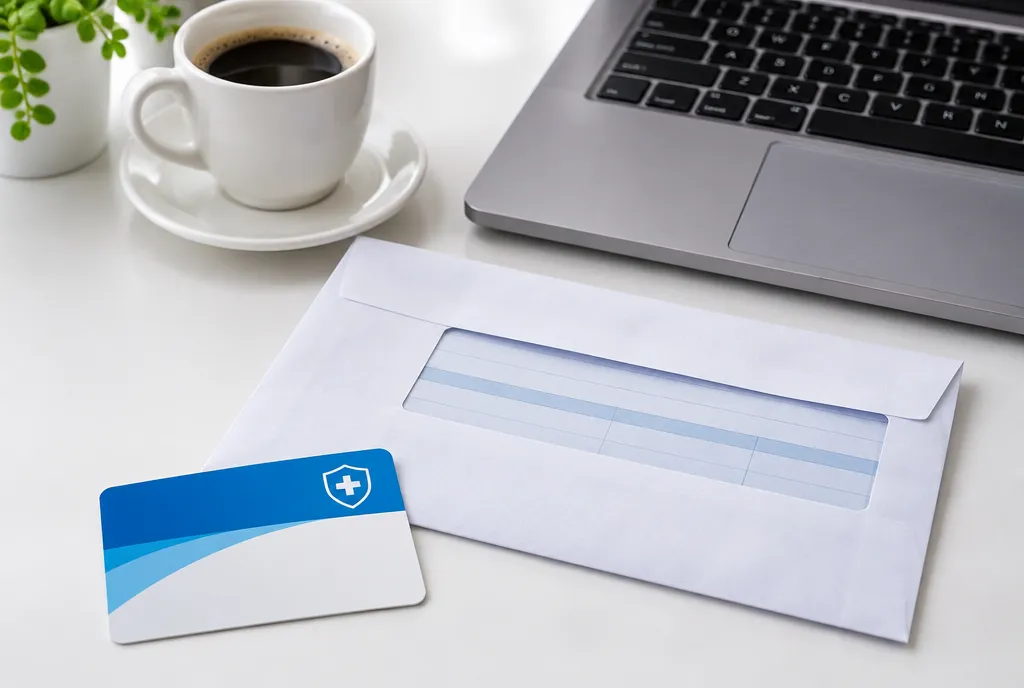
Your AHV number is your Swiss social security number: 13 digits in the format 756.xxxx.xxxx.xx, valid for life. Newcomers do not apply for it, because it is created automatically once the migration office registers you, and your employer reports you to its compensation office (Ausgleichskasse). You will find it on your health insurance card, and you need it for your pension record, your employer and many official forms. Below are the twelve things to know, from the format to contributions in 2026 and 2027, checked on ahv-iv.ch, zas.admin.ch, svazurich.ch and bsv.admin.ch in November 2026. For the full first-month checklist, see our guide to moving to Zürich.
🔢 756.xxxx.xxxx.xx · 💳 printed on your Swiss health insurance card · 🎟️ the number is free; employees pay 5.3% of salary for AHV/IV/EO · 📍 SVA Zürich, Röntgenstrasse 17 (self-employed and non-working people) · how to find your AHV number (ch.ch)
| Format | 13 digits, always starting with 756, written 756.xxxx.xxxx.xx, random and anonymous |
|---|---|
| Where to find it | health insurance card, payslip or salary certificate, AHV certificate if you have one, tax documents |
| How you get it | automatically, once the migration office registers your arrival; employers and health insurers can also request one |
| Cost | free; a replacement AHV certificate is also free |
| Employee contributions | AHV/IV/EO 5.3% + unemployment insurance 1.1% (up to CHF 148,200), same in 2026 and 2027 |
| Minimum if not working | CHF 530 a year in 2026, CHF 541 from 1 January 2027 |
| Account statement | free, ordered online, arrives by post within about 3 weeks |
| Gaps | missing years can be paid only within 5 years |
1. Know the format — 756.xxxx.xxxx.xx
🔢 13 digits · 🇨🇭 756 = the country code for Switzerland · 🔒 random, says nothing about you · ♾️ valid for life · AHV number FAQ (ZAS)
The AHV number (AVS in French and Italian, OASI in English) always has 13 digits and starts with 756, the international code for Switzerland. It is usually written with dots, as 756.xxxx.xxxx.xx. The middle digits are random and the last one is a check digit, so the number contains no birth date, name or nationality.
It is given once and never changes: not when you marry, divorce, change your name or even become Swiss. If you see an older 11-digit number on old documents, that is the previous system, replaced in 2008. AHV stands for Alters- und Hinterlassenenversicherung, the state old-age and survivors’ insurance, and the same number is used for disability insurance (IV) and income compensation (EO).
2. Find your AHV number — five places to look
💳 health insurance card (back or front) · 🧾 payslip and yearly salary certificate · 📇 AHV certificate (no longer sent automatically) · 📄 tax documents · where to find it (ch.ch)
The quickest place is your Swiss health insurance card: every card has shown the AHV number since 2010, and your children’s cards show theirs. Most payslips print it too, and so does the yearly salary certificate (Lohnausweis) your employer gives you for your tax return. Tax documents and letters from a compensation office usually carry it as well.
The blue plastic AHV card (Versicherungsausweis) still exists, but it has not been issued automatically since 2017 and you do not need it. If you want one anyway, the form goes through your employer, or straight to your compensation office if you are self-employed or not working. If you have not taken out health insurance yet, our guide to health insurance in Zürich explains the three-month deadline.
3. How newcomers get it — no application needed
🛂 created when the migration office registers you · 🏢 or requested by your employer’s compensation office after you start work · 🩺 or by your health insurer · 🎓 students: by the university · who creates the number (ZAS)
You cannot apply for an AHV number yourself, and you do not need to. The Central Compensation Office (ZAS) in Geneva keeps the register. According to ZAS, foreign nationals who settle in Switzerland get a number through the migration services: once you register your arrival at the city’s residents’ office and the canton processes your permit, the number is created in the background. Our guide to the Kreisbüro and Personenmeldeamt in Zürich covers that appointment, and the residence permit guide explains the permit itself.
If you start work before that happens, it is not a problem. Your employer reports you to its compensation office, which asks ZAS to create the number after your job starts; cross-border commuters get theirs this way. A health insurer can also request one when you sign up, and universities request numbers for foreign students. If two numbers were ever created for you, ZAS merges them; contact them through their website.
4. Employees: your employer registers you — through its Ausgleichskasse
🏢 every employer is affiliated with a compensation office · 🧾 contributions are deducted from every payslip · 📅 from 1 January after your 17th birthday · leaflet 2.01: salary contributions (AHV/IV)
As an employee you do almost nothing. Your employer is affiliated with a compensation office (Ausgleichskasse): either the cantonal one, SVA Zürich, or a trade association’s office. It reports your salary, deducts your share every month and pays it together with its own share. Each year it declares your salary, and the amount goes onto your individual account (IK), which later decides your pension.
Two special cases. If your employer has no seat in Switzerland and does not pay Swiss contributions for you, for example an embassy or a foreign company without a Swiss branch, you usually have to register and pay yourself, at the employee and employer rate combined. SVA Zürich has a page for employers based abroad (in German). And EU citizens sent to Zürich by a foreign employer may stay insured at home with an A1 certificate; ask your HR team.
5. Self-employed: register with SVA Zürich — or a trade association office
📍 SVA Zürich, Röntgenstrasse 17, Zürich · 🕗 Mon–Fri 08:00–17:00 · 🧮 10.0% of income, lower rates below CHF 60,500 (2026) or CHF 61,500 (2027) · 💸 minimum CHF 530 (2026), CHF 541 (2027) · becoming self-employed (SVA Zürich)
If you start a sole proprietorship or partnership, you must register with a compensation office and be recognised as self-employed: SVA Zürich, the cantonal office, or the office of your trade association if you are a member. Until you are recognised, clients may treat you as an employee. If you run a limited company (GmbH or AG), you are an employee of your own company instead.
The self-employed pay the full rate themselves: AHV 8.1%, IV 1.4% and EO 0.5%, together 10.0%, plus an administration fee. Below an income of CHF 60,500 in 2026 a sliding scale with lower rates applies, down to about 5.4%; from 2027 the upper limit is CHF 61,500 and the lower one CHF 10,300. The office sets provisional contributions and corrects them later from your tax assessment. Self-employed people have no compulsory unemployment or accident insurance and no compulsory pension fund.
6. Not working: register yourself — Nichterwerbstätige
📍 SVA Zürich (the compensation office of your canton of residence) · 📅 from 1 January after your 20th birthday until reference age 65 · 💸 CHF 530 to 26,500 a year in 2026, minimum CHF 541 from 2027 · leaflet 2.03: non-working people
This is the rule many newcomers miss. Everyone living in Switzerland must pay AHV contributions from age 20, even without a job: trailing spouses whose partner works abroad, early retirees, people taking a sabbatical, and job seekers whose unemployment benefit has ended. If no office has contacted you, you must register yourself with the compensation office of your canton, which in Zürich is SVA Zürich. The leaflet is clear that this is your own responsibility.
Contributions depend on your wealth plus 20 times your yearly pension income, and are based on your tax assessment. The minimum is CHF 530 in 2026 and CHF 541 from 2027; the maximum in 2026 is CHF 26,500. Married people do not pay their own contributions if their spouse works in Switzerland and pays at least twice the minimum (CHF 1,060 in 2026). Students pay a flat minimum up to the year they turn 25. SVA Zürich has a calculator for non-working people.
7. Lost or wrong number — who to ask
👔 employees: your employer or HR · 🩺 anyone insured: your health insurer · 🏛️ not working: your municipality or SVA Zürich · 🌍 living abroad: ZAS · duplicate AHV certificate (ZAS)
If you cannot find your AHV number, ask the office that already has it: your employer if you work, your compensation office if you are self-employed, your health insurer for you and your children, the city’s residents’ office if you live here but do not work, or your university if you study. People who have left Switzerland ask ZAS for a duplicate certificate online.
Often you do not even need to know it. ZAS points out that offices dealing with family allowances, unemployment or health insurance can look the number up themselves. One exception: opening an electronic patient record, where you must give it yourself. If your name or date of birth is wrong on your AHV record, report it to a compensation office that keeps an account for you; the InfoRegister (see step 9) tells you which ones do.

8. Contribution rates 2026 and 2027 — what comes off your salary
🧾 employee share: AHV 4.35% + IV 0.7% + EO 0.25% = 5.3% · 🏢 employer pays the same · 💼 unemployment insurance 1.1% each, up to CHF 148,200 · 🗳️ 13th AHV pension: VAT vote on 29 November 2026 · AHV contributions (ahv-iv.ch)
The total rate for employees is 10.6% of salary: AHV 8.7%, IV 1.4% and EO 0.5%. Half, 5.3%, is deducted from your pay and your employer pays the other half. Unemployment insurance (ALV) adds 2.2%, split 1.1% each, on salary up to CHF 148,200 a year; nothing is due on the part above that. Pension fund and accident insurance come on top and vary by employer. On a monthly salary of CHF 8,000 that means CHF 424 for AHV/IV/EO and CHF 88 for ALV.
| Item | 2026 | 2027 |
|---|---|---|
| Employees AHV/IV/EO (total, half each) | 10.6% | 10.6% |
| Unemployment insurance (total, half each) | 2.2% up to CHF 148,200 | 2.2% up to CHF 148,200 |
| Self-employed AHV/IV/EO | 10.0% (sliding scale below CHF 60,500) | 10.0% (sliding scale below CHF 61,500) |
| Minimum contribution (self-employed, non-working) | CHF 530 | CHF 541 |
| Minimum full AHV pension per month | CHF 1,260 | CHF 1,280 |
| Maximum full AHV pension per month | CHF 2,520 | CHF 2,560 |
What about the 13th AHV pension? It is paid for the first time in December 2026, without new money in 2026 and 2027. Parliament decided to finance part of it with VAT, raising the standard rate from 8.1% to 8.5% from 2028, and rejected higher salary contributions. Swiss voters decide on 29 November 2026 (BSV vote page, in German). The 2027 amounts in the table were set by the Federal Council on 2 October 2026 (BSV press release).
9. Order your account statement — the free Kontoauszug
🆓 free · 💻 online form, you need your AHV number · 📬 by post within about 3 weeks · ✍️ 30 days to ask for corrections · order your account statement (ahv-iv.ch)
Every compensation office keeps an individual account (IK) with your yearly salary or income and your contribution years. The account statement (IK-Auszug or Kontoauszug) shows whether your employers really reported your salary and whether you have gaps. You can order it free online from ahv-iv.ch, which collects the statements from all offices for you, or from SVA Zürich. SVA Zürich says it arrives by post within three weeks.
Order it towards the end of the year: income of the current year only appears the following year, and SVA notes that 2025 salaries may only show from November 2026. SVA recommends checking every three to five years. If an entry is wrong, you have 30 days after receiving it to ask the office for a correction. To see which offices hold an account for you, use the InfoRegister of ZAS.
10. Close contribution gaps — within 5 years
⏳ missing contributions can be paid only within 5 years · 📉 each missing year cuts your pension (a full pension needs 44 years) · 👶 child-raising credits for parents · preventing gaps (SVA Zürich)
A full AHV pension needs a complete contribution record from age 21 to 65, which is 44 years. Every missing year reduces the pension for life, roughly by one forty-fourth. Gaps happen in Switzerland when people stop working and forget to register as non-working, for example during a career break, a long trip or after studies.
You can pay missing contributions only before they expire, which is five years. So if your statement shows a gap from three years ago, contact SVA Zürich now. Years you spent abroad before moving here are not gaps you can buy back: EU and treaty-country periods count in those countries’ own pension systems. Parents automatically get child-raising credits on their account for years with children under 16; our guide to childcare in Zürich covers the costs of those years.
11. The three pillars in brief — AHV, pension fund, Pillar 3a
1️⃣ AHV/IV: state, for everyone · 2️⃣ pension fund (BVG): through your employer from CHF 22,680 salary (2026), CHF 23,040 (2027) · 3️⃣ Pillar 3a: private, up to CHF 7,258 (2026) or CHF 7,373 (2027) tax-deductible · 2027 amounts (BSV)
Switzerland’s retirement system has three pillars. The first is the AHV, which is linked to your AHV number and meant to cover basic needs. The second is the occupational pension fund (Pensionskasse, BVG): compulsory for employees earning more than CHF 22,680 a year in 2026 and CHF 23,040 in 2027, with contributions shared with your employer and shown separately on your payslip. Together they aim at roughly 60% of your last salary.
The third pillar is voluntary. Payments into a Pillar 3a account are tax-deductible up to CHF 7,258 in 2026 and CHF 7,373 in 2027 if you have a pension fund, or up to 20% of income (maximum CHF 36,288, then CHF 36,864) without one. Our guide to Pillar 3a and taxes in Zürich explains how it lowers your tax bill, and the bank account guide shows where to open one.
12. Leaving Switzerland — pension later, or a refund
🇪🇺 EU/EFTA and most treaty countries: no refund, pension paid abroad later · 🌍 no-treaty countries: AHV contributions refunded on request, after at least 1 year · 💸 up to 8.7% of your AHV salary, taxed at source · refund of contributions (ZAS)
Your AHV number and your contributions stay valid when you leave. Citizens of Switzerland, EU and EFTA states, and of most countries with a social security agreement, cannot get their contributions back. Instead they receive a Swiss pension later, paid abroad by the Swiss Compensation Office (SCO) in Geneva, even after just one year of contributions.
Citizens of countries without an agreement can ask for a refund once they and their family have left Switzerland for good, if they paid for at least one full year. Under certain conditions this also applies to Australia, Brazil, China, India, the Philippines, South Korea, Tunisia and Uruguay. Only the AHV part is refunded, at most 8.7% of the salary on which you paid (your 4.35% plus the employer’s 4.35%), and the refund is taxed at source. Deregister with the city before you leave and close your tax year (see leaving Switzerland and taxes); for the move itself, see our removal companies in Zürich. Swiss and EU citizens moving outside the EU can ask about the voluntary AHV/IV insurance.
Who may use your AHV number — and who should not ask
The AHV number is anonymous. ZAS says that someone who knows it, even with your name and birth date, cannot steal your identity or access databases with it. Still, it is a personal identifier, and the law decides who may use it outside social insurance: public offices, tax authorities, schools and universities, health insurers, doctors, hospitals and labs. Banks also report it for the international exchange of tax information.
Give it to your employer, your health insurer, your compensation office and the authorities. A landlord, a gym, an online shop or a caller claiming to be “from the AHV” has no reason to ask for it. Be careful with unexpected calls or emails asking for it: if in doubt, contact SVA Zürich through the details on its own website.
Common mistakes
- Not registering while not working. A spouse who follows a partner to Zürich without a job may have to pay as a non-working person. Check with SVA Zürich in your first year.
- Assuming the employer reported everything. Order a statement after your first full year and compare it with your salary certificate.
- Waiting too long with gaps. After five years, missing contributions can no longer be paid, and the pension cut is permanent.
- Applying for a number. There is no application. If you cannot find it, ask your employer or health insurer.
- Forgetting the other first-week tasks. Register within 14 days, sort out the Serafe radio and TV fee, and if you drive, plan to exchange your driving licence in Zürich within 12 months. Commuters can compare the Half Fare travelcard with a GA.
FAQ
Is the AHV number the same as the social security number?
Yes. In Switzerland the AHV number (AVS/OASI) is the social security number. Employers, health insurers and authorities all use the same 756 number.
How long does it take to get an AHV number?
There is no waiting time you can influence. It is created automatically after your registration with the migration office or after your employer reports you. If your health insurance card has arrived, the number is on it.
Does my AHV number change if I become Swiss?
No. It stays the same for life, through marriage, a name change or naturalisation. Our guide to Swiss citizenship in Zürich explains that process.
Can I get my AHV contributions back when I leave?
Only if you are a citizen of a country without a social security agreement (or one of a few listed treaty countries) and paid for at least one year. EU and EFTA citizens get a pension later instead.
Do I need the plastic AHV card?
No. Knowing the number is enough, and it is on your health insurance card. A certificate can still be ordered free if you want one.
Keep planning
- Moving to Zürich: the complete checklist
- Kreisbüro Zürich: registering at the Personenmeldeamt
- Residence permit in Zürich
- Health insurance in Zürich
- Taxes in Zürich for newcomers
- Opening a bank account in Zürich
- Is Zürich expensive? Real CHF prices
- Serafe: the radio and TV fee
📬 The ZurichGuru newsletter
Once a week: the best events, new places and what is changing in Zürich. Free, unsubscribe any time.