'/%3E%3C/svg%3E) EN
 DE
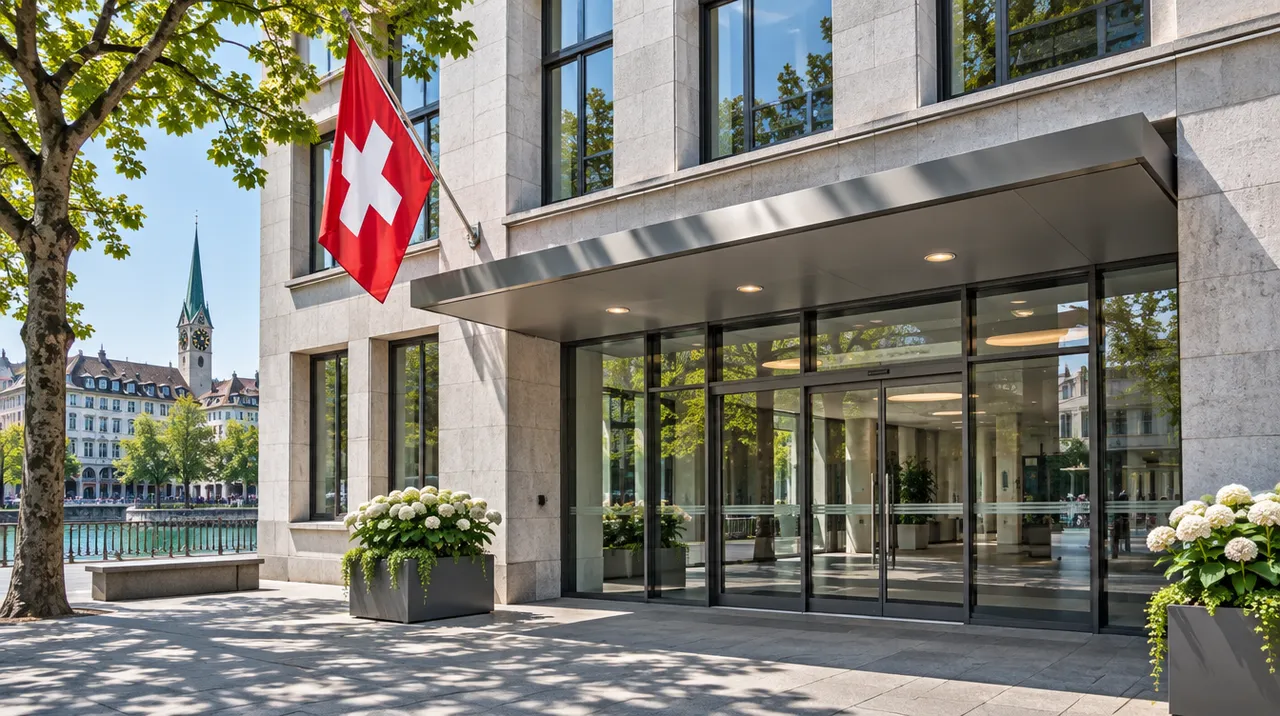
Your residence permit in Zürich starts with one appointment: within 14 days of moving into your flat, you register in person with the city’s residents’ office, the Personenmeldeamt. EU and EFTA citizens get their permit almost automatically once they have a job; people from other countries need their employer to secure a work permit before they even travel. After registration come the biometric photo at the cantonal migration office and the permit card by post. Below are the eleven steps, with documents and 2026 fees checked on the city, cantonal and federal sites in November 2026. For the full first-month checklist, see our guide to moving to Zürich.
📅 Register within 14 days of moving in · 🎟️ CHF 40 registration fee per adult + migration office fee (EU/EFTA CHF 72–127, other countries CHF 124–144) · 📍 Personenmeldeamt Süd, Stadthaus · official registration page (City of Zürich)
Residence permit in Zürich: the types at a glance
Switzerland has one system for EU/EFTA citizens, based on the free movement agreement, and a stricter one for everyone else (“third countries”, which since 2021 includes the UK). The permit is a card in credit-card format, and its letter shows what you may do.
| Permit | Who gets it | Typical validity |
|---|---|---|
| L (short-term) | EU/EFTA: job contract of 3–12 months; also EU job seekers. Non-EU: quota-based | as long as the contract |
| B (residence) | EU/EFTA: contract of 12+ months or unlimited. Non-EU: qualified workers, quota-based | EU/EFTA 5 years; non-EU usually renewed yearly |
| C (settlement) | after 10 years, or 5 years for some nationalities and spouses | unlimited right to stay |
| G (cross-border) | live abroad, work here, go home at least weekly | EU/EFTA up to 5 years |
| Ci | working spouses and children of staff of international organisations | linked to the main holder |
1. Work out which permit you need — EU/EFTA or not
🇪🇺 EU/EFTA: L for contracts of 3–12 months, B for 12 months or more · 🌍 non-EU and UK: permit needed from the first working day · 🧾 your contract length decides the type · B permit EU/EFTA (SEM)
EU and EFTA citizens have a right to a permit once they have a job. With a contract of at least twelve months or an unlimited one, you get a B permit valid for five years. With a contract of three to twelve months, you get an L permit for the length of the contract. People coming to look for work can also get an L permit, and those living here without a job need proof of enough money and health insurance for a B permit.
For everyone else the rules are about the labour market, not about rights. Only managers, specialists and other qualified workers are admitted, Swiss and EU candidates have priority, and the number of permits is capped every year.
2. Non-EU: your employer applies first — before you travel
🏢 only the employer can apply, at the cantonal Amt für Wirtschaft · 📊 2026 quotas: 4,500 B and 4,000 L permits nationwide; UK separately 2,100 B and 1,400 L · 🛂 then a D visa from the Swiss embassy, if your nationality needs one · third-country workers (Kanton Zürich)
If you are not an EU/EFTA citizen, you need a permit from day one, and your future employer files the application with the canton’s Office for Economy (Amt für Wirtschaft). The canton checks that the job is in Switzerland’s economic interest, that you are well qualified, that no suitable Swiss or EU candidate was found, and that salary and conditions are normal for the place and industry. The canton passes it to the federal State Secretariat for Migration for approval.
The Federal Council kept the quotas for 2026 unchanged: 4,500 B and 4,000 L permits for third-country workers across Switzerland, plus a separate 2,100 B and 1,400 L for UK citizens. At the start of 2026 the canton of Zürich received 250 B and 399 L units, with extra federal units possible. The quotas for 2027 are usually decided by the Federal Council in late autumn; check the canton’s quota page. Once approved, nationals who need a visa collect an entry visa (type D) at the Swiss embassy and bring the “assurance of a residence permit” to their registration.
3. Find a flat before you register — no address, no permit
🏠 registration only once you actually live in Zürich · 📄 lease, sublet contract or a landlord’s confirmation · 🛏️ staying with someone: the host confirms online · registration rules (City of Zürich)
The city only registers you once your life is centred in Zürich, so a hotel booking is not enough. You need a rental contract, a sublet contract or a housing certificate, or the person you live with confirms your move online (the city calls this Drittmeldepflicht). Temporary furnished flats with a proper contract work.
Because the flat comes first, most newcomers start with the search. Our step-by-step guide to finding a flat in Zürich covers viewings, applications and deposits, and the guide to the Zürich neighbourhoods helps you choose a district. If you settle in a town outside the city, you register at that municipality’s Einwohnerkontrolle instead; the steps are the same.
4. Book your appointment — and do it on day one
📅 14-day deadline from moving in · 🗓️ appointment always needed for arrivals from abroad (since 4 May 2026 for most services) · 📍 Personenmeldeamt Süd, Stadthaus, Stadthausquai 17 · 🕗 Mon–Fri 08:00–16:30 · Personenmeldeamt services and hours
People arriving from abroad register in person at the Personenmeldeamt Süd in the Stadthaus, by the Limmat near Bürkliplatz. The old district offices (Kreisbüros) are now called Personenmeldeamt, and since 4 May 2026 you need an appointment for nearly everything. Families must all come together, children included.
The city warns that appointments are sometimes only available after the 14-day deadline. Book the next free slot anyway, then ask for a deadline extension through the city’s contact form. The confirmation email has a “Termin umbuchen” link, so you can check regularly for an earlier slot. Plan the appointment before you land, as you cannot register before the date you move in.
5. Bring the right documents — originals, translated
🛂 passport (EU/EFTA: ID card is enough) · 🏠 lease or landlord confirmation · 📄 employment contract or proof of studies · ✉️ assurance of residence permit and visa authorisation, if you have them · 💍 marriage and birth certificates in the original · document list (City of Zürich)
Bring for every person: a valid passport (EU/EFTA citizens can use their national ID card), the rental contract or housing confirmation, and your employment contract or a confirmation of studies. Non-EU nationals add the assurance of a residence permit and the visa authorisation if they have one.
Couples arriving together need the original marriage certificate, and parents the original birth certificates of their children. Documents that are not in German, French, Italian or English must be brought in the original with an official translation. If a child moves with only one parent, you also need the other parent’s written consent and a copy of their ID. You will also be asked your religion, which decides church tax; our guide to taxes in Zürich explains why it matters.

6. Pay the fees — card preferred
🎟️ CHF 40 registration fee per adult · 🇪🇺 migration office fee EU/EFTA: adults CHF 72–127, children from CHF 37 · 🌍 other countries: adults CHF 124–144, children CHF 69–89 · 💳 card payment preferred · fees (City of Zürich)
At the appointment you pay the city’s registration fee of CHF 40 per adult, plus the cantonal migration office fee for your permit card. The city lists the migration fees as a guide: for EU/EFTA adults CHF 72 to 127 and for children from CHF 37; for third-country adults CHF 124 to 144 and for children CHF 69 to 89. The exact amount depends on your nationality and the permit type, and the migration office can change it.
So a couple from Germany with two children typically pays a few hundred francs in total, a non-EU couple a little more. Pay by card if you can. It is one of the first bills of your new life; our guide is Zürich expensive? lists the rest.
7. Give your biometric data — at the Migrationsamt
📍 Migrationsamt des Kantons Zürich, Berninastrasse 45, 8090 Zürich · 🕗 Mon–Fri 08:00–16:30 · 📸 photo and signature; non-EU also two fingerprints · 🗓️ you get the date at registration · permit application (Kanton Zürich)
At registration you receive an appointment at the cantonal migration office near Berninaplatz in Zürich-Nord to record your data. EU/EFTA citizens give a photo and a signature, and their card has no chip. Third-country nationals also give two fingerprints, stored on the chip of their card. Children must come with a parent who has custody.
If the date does not suit you, move it online with the token code on your appointment letter. The office lies just north of Oerlikon, and our guide to getting around Zürich explains which ticket you need.
8. Receive your permit card — and start the other deadlines
📬 the card is produced externally and posted to your home · 🩺 health insurance within 3 months of arrival · 🏦 open a bank account with your permit or registration confirmation · permit cards (Kanton Zürich)
Once the canton has approved your residence permit in Zürich, the card is printed by an outside company and sent by post. Until it arrives, your registration confirmation and the receipt from the migration office show that you live here legally. Keep them with your passport when you travel.
The registration date also starts other clocks. You have three months to take out Swiss health insurance, explained in our health insurance in Zürich guide. Banks open accounts with your permit or the city’s registration confirmation, see opening a bank account in Zürich.
9. Bring your family — family reunification
🇪🇺 EU/EFTA: spouse and children under 21 (and dependants) can join · 🌍 non-EU: rules on housing, income and language, time limits for the application · 👶 newborn in Zürich: appointment for the baby’s permit card · family reunification (Kanton Zürich)
If your family arrives with you, everyone registers at the same appointment. EU/EFTA citizens can bring their spouse and children, and family members may work. Third-country nationals with a B permit can usually bring their spouse and children under 18 if the flat is big enough, the family does not depend on welfare, and the spouse registers for a language course. Applications have time limits, so apply early.
A baby born in Zürich also needs a permit card: book an appointment at the Personenmeldeamt after the birth. Parents should look next at our guides to childcare in Zürich and schools in Zürich, because school places depend on your registered address.
10. Report moves, changes and departure — within 14 days
🏠 moving within the city: online · ✈️ leaving Zürich: deregister online · 🔁 changing permit type, new job or name change on the card: appointment · online services (Personenmeldeamt)
Every move within the city, and every move away, must be reported, and most of it can be done online on the city’s site. Changes to your card (marriage, divorce, a new name, a lost card) and a change of permit type need an appointment in person. Non-EU nationals should check with the canton before they change jobs, as a switch is not always allowed without a permit.
When you leave Switzerland, deregister before you go. Your permit ends with the departure, and the tax office closes your tax year (see taxes in Zürich). For the move itself, our removal companies in Zürich list helps, and recycling bulky items is explained in the recycling in Zürich guide.
11. Renew, or apply for a C permit — after 5 or 10 years
🔁 renew at the Personenmeldeamt with an appointment · 🇪🇺 EU/EFTA B: renewable for 5 years · 🏡 C permit after 10 years, or 5 years for citizens of e.g. Germany, Austria, France, Italy, the Netherlands and others · 🗣️ German A2 spoken and A1 written · settlement permit (Kanton Zürich)
Renew your residence permit in Zürich before the card expires; this needs an appointment at the Personenmeldeamt. An EU/EFTA B permit is renewed for another five years if you still meet the conditions. Non-EU B permits are usually renewed one year at a time.
After ten years in Switzerland, the last five on a residence permit without interruption, you can apply for the settlement permit C if you meet the integration criteria. Citizens of Austria, Belgium, Denmark, Finland, France, Germany, Greece, Ireland, Italy, Luxembourg, the Netherlands, Portugal, Spain, Sweden and the EFTA states can get it after five years under treaties, and spouses of Swiss and C-permit holders can too. Everyone needs proof of German at A2 spoken and A1 written, except citizens of Germany, Austria and Liechtenstein. A few Swiss German phrases will not replace a certificate, but they help every day.
Under 90 days and cross-border workers
- Jobs of up to three months a year (EU/EFTA): no permit, your employer files an online notification before you start (notification procedure, SEM). You do not register at the Personenmeldeamt unless you stay longer than 90 days.
- Cross-border commuters (G permit): you live in an EU/EFTA country, work in Switzerland and return home at least once a week. The G permit is valid for five years with a contract of more than a year (G permit, SEM).
- Weekly residents (Wochenaufenthalt): if you keep your main home elsewhere in Switzerland and stay in Zürich during the week, you register as a weekly resident, with an appointment.
FAQ
Can I register before I find a flat?
No. The city only registers you once you actually live in Zürich, with a lease, sublet contract or a host’s online confirmation.
What if there is no appointment within 14 days?
Book the next free slot and ask for an extension through the city’s contact form. The city says this openly on its registration page.
How long does the permit card take?
The card is printed after the canton approves the permit and the biometric data are recorded, then posted to you. Until then, keep your registration confirmation as proof.
After registering, the city’s offices handle every later move and certificate (see our guide to the residents’ office, the former Kreisbüro Zürich), your employer arranges your AHV number, and after ten years you may apply for Swiss citizenship in Zürich.
Hours, phone times, the biometric appointment, renewals and lost cards at the cantonal office are all in our guide to the Migrationsamt Zürich.
Your permit also decides how you pay tax: B and L holders are taxed at source, explained step by step in our guide to withholding tax in Zürich.
Keep planning
- Moving to Zürich: the complete checklist
- Finding a flat in Zürich
- Health insurance in Zürich
- Opening a bank account in Zürich
- Taxes in Zürich for newcomers
- Zürich Airport to the city
- Zürich neighbourhoods
- Find a Pro: local tradespeople in Zürich
📬 The ZurichGuru newsletter
Once a week: the best events, new places and what is changing in Zürich. Free, unsubscribe any time.