'/%3E%3C/svg%3E) EN
 DE

The Cabaret Voltaire Zürich is where Dada was born. On 5 February 1916, in the back room of a beer and wine tavern at Spiegelgasse 1 in the Niederdorf, a group of young artists in wartime exile opened a nightclub that turned art upside down. Today the house is a small museum, an exhibition space, a busy events venue and a very good bar, and entry to the house is free. This guide covers the history, what you can see, the current exhibition, upcoming events, opening hours and prices, plus Lenin’s flat a few doors up the lane. We checked every time, price and date on the official Cabaret Voltaire website in November 2026.
📍 Spiegelgasse 1, 8001 Zürich · 🕐 exhibitions Tue–Thu 17–20, Fri–Sun 13:30–18 · 🎟️ house free, exhibition CHF 8, reduced CHF 5 · official website
Why visit the Cabaret Voltaire Zürich
Dada changed modern art more than almost any other movement. Collage, sound poetry, the ready-made, performance art and even punk all trace a line back to it, and it all started in this one room in Zürich. Standing in the hall where Hugo Ball and Emmy Hennings put on their first soirées is a small thrill for anyone who cares about art, literature or music.
It is also an easy visit. The house sits on our Zürich Old Town walking route, you can walk in for free, and the exhibition costs only CHF 8. If you are not a museum person, come in the evening for a drink: the bar is one of the most characterful in the Niederdorf.
The story of Dada at the Cabaret Voltaire
In 1916 neutral Switzerland was full of refugees from the First World War. In the house at Spiegelgasse 1, Jan Ephraim ran a beer and wine tavern called the Holländische Meierei. The German writer Hugo Ball and the performer and poet Emmy Hennings persuaded him to let them use the back room, and on 5 February 1916 they opened the Cabaret Voltaire together with Hans Arp, Sophie Taeuber, Marcel Janco and Tristan Tzara. Most of them were young emigrants for whom the cabaret was a refuge.
From February to early summer 1916 the room hosted nightly experiments. Sound poems without words, simultaneous poems recited in several languages at once, animal noises, masks, dance and manifestos: the artists turned the language of wartime propaganda on its head. The word “Dada”, which belongs to no particular language, was proclaimed here as the name of the movement. No sound or film recordings of those evenings exist; everything we have was recorded later.
The cabaret itself closed after only a few months, and the building served many other purposes for decades. In 2002 a group of artists and activists occupied it, so the story goes, to stop it from becoming a pharmacy. With political support it reopened in 2004 as a cultural venue run by an association, and a renovation in 2022 added the two bars you find today.
Lenin at Spiegelgasse 14
A few doors up the lane, at Spiegelgasse 14, Vladimir Lenin lived with his wife Nadezhda Krupskaya for about a year during the First World War. A plaque on the house marks the spot. He spent much of his time in Zürich’s libraries and finished his book “Imperialism, the Highest Stage of Capitalism” here. When the February Revolution broke out in Russia in 1917, he left Switzerland for home.
Did Lenin ever drop in at the Cabaret Voltaire? Nobody knows. Zürich Tourism notes that the question still fuels speculation about whether Lenin was a secret Dadaist. Either way, it is remarkable that a world revolution and an art revolution were being planned on the same short lane in the same months. You see the plaque from the street. Zürich Tourism’s Lenin page has more background. Georg Büchner had already written “Leonce und Lena” on the same street in 1836.
What to see inside the Cabaret Voltaire
The Historic Hall
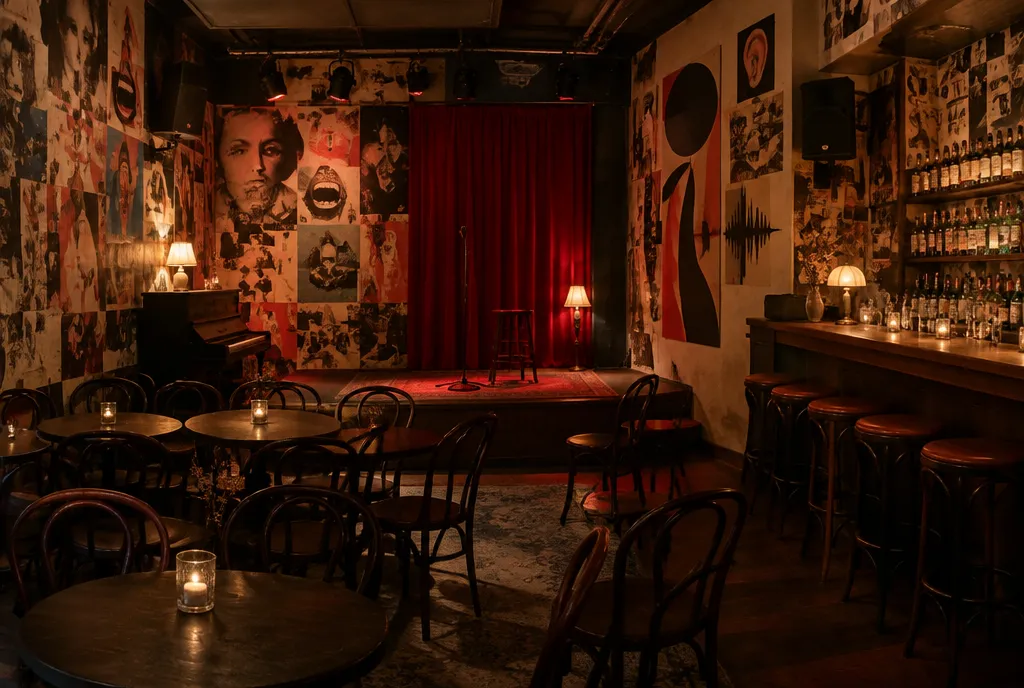
The back room where the Dadaists performed is now the Historic Hall, with its own bar. It is the stage for soirées, readings, concerts and talks, and it seats up to 80 people. When no event is on, you can look in and imagine the noise of 1916.
The Vaulted Cellar and the Dada display case
Changing exhibitions are held in the Vaulted Cellar downstairs. The same room holds the Dada display case, which shows original documents from 1916 and later, often on loan from the Kunsthaus Zürich and other collections. The pairing of historic papers with contemporary art is the house’s whole idea: Dada as a question to the present, not a dusty style.
The Dada Library
On the first floor, the Dada Library grew out of a gift by the collector Hans Bolliger and the curator Guido Magnaguagno. By day it works as a reading room, with first editions and facsimiles in a wooden display; in the evening it becomes an extra bar area. Look out for the playful glass-and-aluminium lamp sculptures by Stefan Burger.
CVBOOKS
The entrance bar has a small bookshop with art publications and zines. The pocket guide “Dada in Zürich”, which leads you to other Dada sites around the city, costs CHF 7 in English or German.
Current exhibition at the Cabaret Voltaire Zürich
“DadaZwischenSprachen” (Dada Between Languages) runs until 10 January 2027. The show follows the language experiments of 1916, from sound poems to multilingual simultaneous poems, through prints, scores, drafts and manifestos, and asks what got lost: the voices of the women, and the non-Western sources the Dadaists borrowed from. It also traces Dada’s afterlife up to today, with works by artists such as Katalin Ladik, Babi Badalov, Thomas Hirschhorn, Christine Sun Kim and Ewa Partum, alongside the bands Yello and Talking Heads. The historic material comes from the Kunsthaus Zürich, the Zentralbibliothek Zürich and the Hugo Ball Society in Pirmasens.
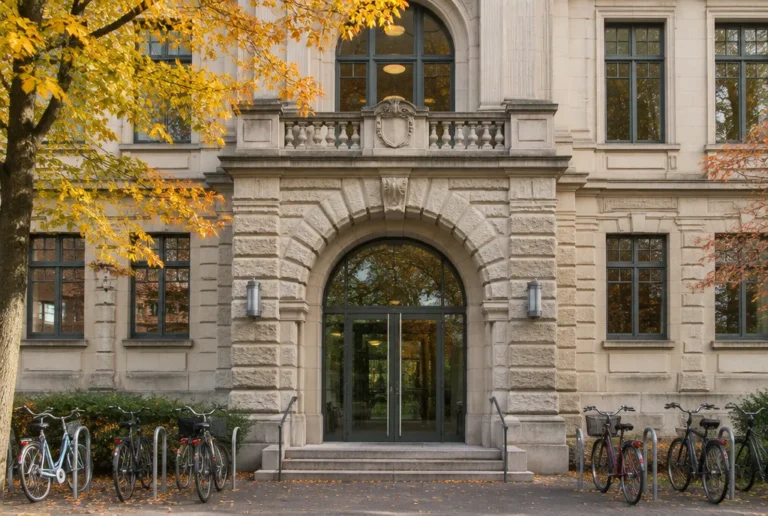
The exhibition is a cooperation with the University of Zurich. The show is compact: allow 30 to 45 minutes.
Events in November and December 2026
The Cabaret Voltaire is above all a live venue, just as it was in 1916. Ticket prices are set per event. Highlights on the programme:
- Wed 4 Nov, 18:00–21:00: “so did I love (yes, yes)”, a love-ritual evening, half workshop and half karaoke, with the New York theatre duo Ta-Nia.
- Thu 5 Nov, 19:00–23:00: “La-Di-Dada-Dunnstig” bar night in the Historic Hall with DJ Picicletta (house, ambient, disco).
- Wed 11 Nov, 19:30: Literarischer Club Zürich with the writer Peter Stamm, CHF 15, reduced CHF 10.
- Sun 15 Nov, 17:00: “Dada unlesbar”, an evening on how to read Dada nonsense texts aloud, with Ariane von Graffenried and Fatima Moumouni, in cooperation with the Strauhof.
- Wed 25 Nov, 19:00: “dears, write”, a monthly writing session in the Dada Library, open to all with no registration.
- Fri 27 Nov, 20:30: “Offstage” by the Opernhaus Zürich: musicians of the opera orchestra play a 30-minute pop-up concert in the bar, free entry, no reservations.
- Wed 9 Dec, 19:30: Literarischer Club Zürich, Long Night of Debuts.
- 16–17 Dec: “FINTA*TAINMENT”, an open stage hosted by Jane Mumford, with newcomers plus one established act each night.
- Thu 14 Jan 2027, 18:00: “The Psychedelic Salon”, talks on current psychedelic research (no drugs consumed), in English, CHF 20, reduced CHF 15.
The programme changes often, so check the agenda on the official site before you go.
The bar and café
The house has two bars: the Artists’ Bar in the entrance, which currently shows works by Katalin Ladik and Babi Badalov, and the bar in the Historic Hall. The bar is open Tuesday to Thursday 17:00–23:00, Friday and Saturday from 13:30 until late, and Sunday 13:30–18:00. It is a relaxed place for a glass of wine or a beer after walking the Old Town, and on event nights it gets lively.
Opening hours and prices
- Exhibitions: Tuesday–Thursday 17:00–20:00; Friday, Saturday and Sunday 13:30–18:00; or on request
- Bar and café: Tuesday–Thursday 17:00–23:00; Friday and Saturday 13:30–late; Sunday 13:30–18:00
- Monday: no regular opening hours
- Entry to the house: free
- Exhibition in the Vaulted Cellar: CHF 8, reduced CHF 5
- Events: price per event
Private guided tours of the house and other Dada sites in Zürich cost CHF 250 for one hour or CHF 300 for 90 minutes for private groups, in German or English (French on request). Book by email at fuehrungen@cabaretvoltaire.ch; tours start at the Münstergasse entrance. Members (CHF 100 a year, CHF 50 for students and artists) get free entry to all exhibitions and events and 10% off drinks.
How to get to the Cabaret Voltaire
The house is on the corner of Spiegelgasse and Münstergasse in the Niederdorf, on the east bank of the Limmat. The nearest tram stops are Rathaus and Helmhaus on Limmatquai, each about three minutes on foot; Central and Bellevue are about eight minutes away. From Zürich HB it is a 12-minute walk across the Bahnhofbrücke and down Niederdorfstrasse. Tram routes in the centre are partly changed because of construction until 13 December 2026, so check the ZVV journey planner. Spiegelgasse climbs steeply behind the house.
What to combine with the Cabaret Voltaire
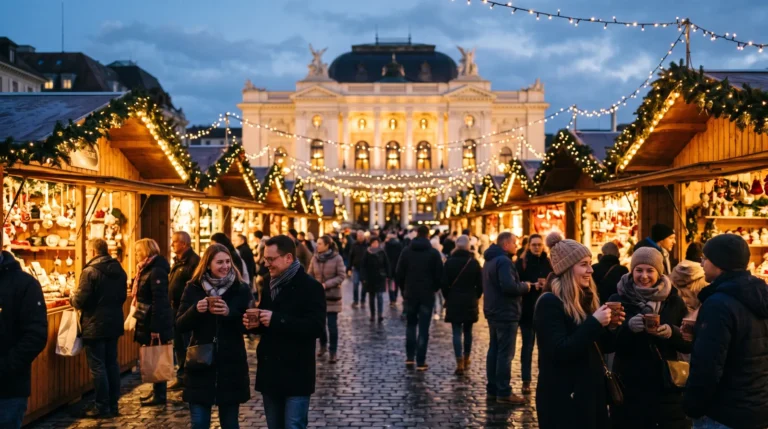
For the art itself, go to the Kunsthaus Zürich, which holds one of the world’s most important Dada collections and is ten minutes’ walk uphill. The Grossmünster is three minutes south along Münstergasse. In winter the Niederdorf Christmas market runs right past the door from 19 November to 23 December 2026. For more museums, see our guide to the best museums in Zürich.
Cabaret Voltaire Zürich: FAQ
Is the Cabaret Voltaire free?
Entry to the house and the bar is free. The exhibition in the Vaulted Cellar costs CHF 8, or CHF 5 reduced, and events are priced individually.
When is the Cabaret Voltaire open?
Exhibitions are open Tuesday to Thursday 17:00–20:00 and Friday to Sunday 13:30–18:00. The bar stays open until 23:00 Tuesday to Thursday and late on Friday and Saturday.
Who founded the Cabaret Voltaire?
Emmy Hennings and Hugo Ball, together with Hans Arp, Sophie Taeuber, Marcel Janco and Tristan Tzara, on 5 February 1916.
Where did Lenin live in Zürich?
At Spiegelgasse 14, a few doors up from the Cabaret Voltaire, for about a year until 1917. A plaque marks the house.
Into art and design? The Pavillon Le Corbusier by the lake was the last building Le Corbusier designed.
More culture in Zürich
The Cabaret Voltaire Zürich is a short but unforgettable stop. Pair it with a walk through the Zürich Old Town, the Dada collection at the Kunsthaus and our guide to the best museums in Zürich, or find more ideas among the things to do in Zürich.
📬 The ZurichGuru newsletter
Once a week: the best events, new places and what is changing in Zürich. Free, unsubscribe any time.